

The Immaculate Conception
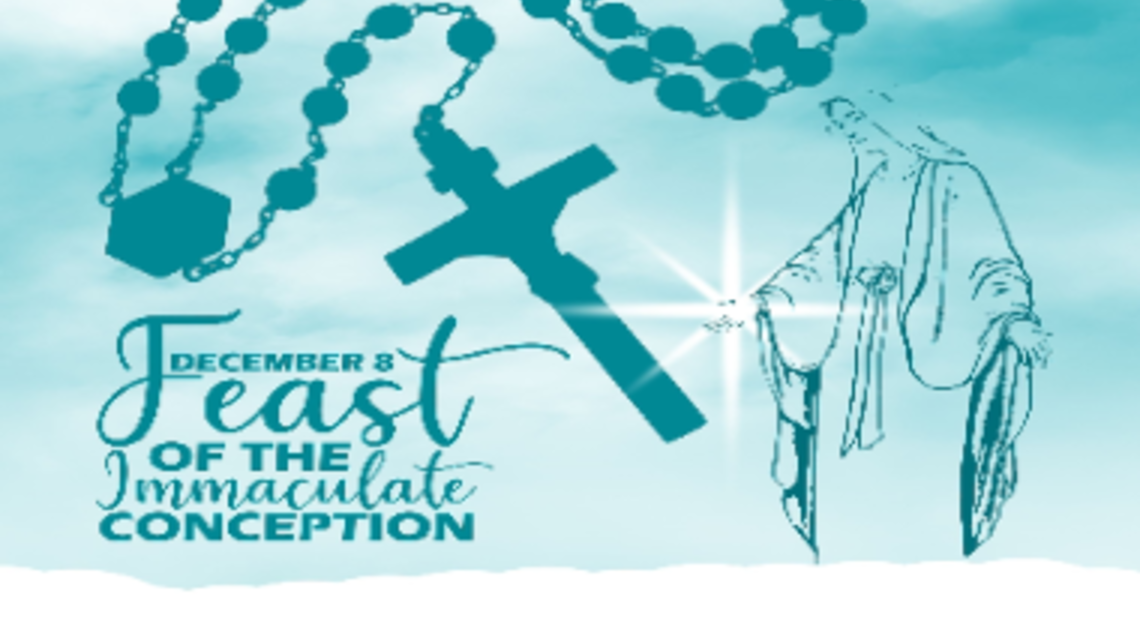
The Story of the Immaculate Conception of Mary
A feast called the Conception of Mary arose in the Eastern Church in the seventh century. It came to the West in the eighth century. In the 11th century it received its present name, the Immaculate Conception. In the 18th century it became a feast of the universal Church. It is now recognized as a solemnity.
In 1854, Pius IX solemnly proclaimed: “The most Blessed Virgin Mary, in the first instant of her conception, by a singular grace and privilege granted by almighty God, in view of the merits of Jesus Christ, the savior of the human race, was preserved free from all stain of original sin.”
It took a long time for this doctrine to develop. While many Fathers and Doctors of the Church considered Mary the greatest and holiest of the saints, they often had difficulty in seeing Mary as sinless—either at her conception or throughout her life. This is one of the Church teachings that arose more from the piety of the faithful than from the insights of brilliant theologians. Even such champions of Mary as Bernard of Clairvaux and Thomas Aquinas could not see theological justification for this teaching.
Two Franciscans, William of Ware and Blessed John Duns Scotus, helped develop the theology. They pointed out that Mary’s Immaculate Conception enhances Jesus’ redemptive work. Other members of the human race are cleansed from original sin after birth. In Mary, Jesus’ work was so powerful as to prevent original sin at the outset.